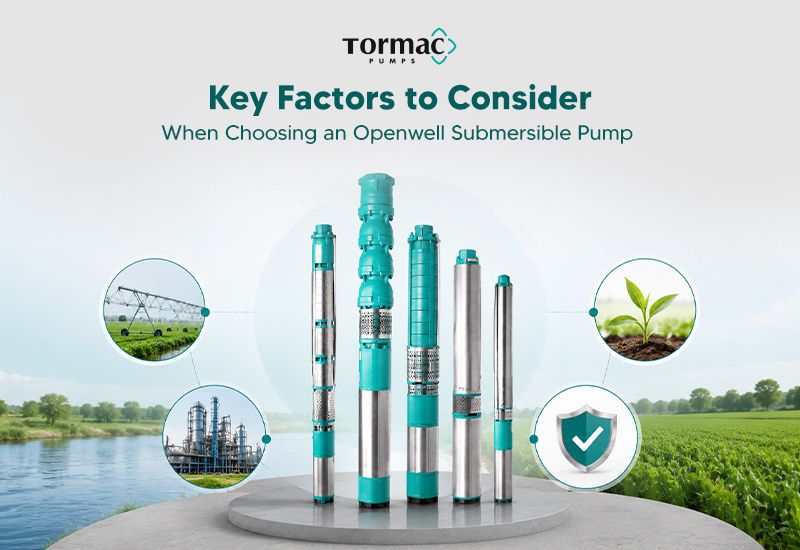
- Openwell submersible pump selection depends on flow rate, head, water level fluctuations, and construction material.
- Horizontal pumps suit shallow tanks and sumps, while vertical pumps perform better in deeper open wells.
- MS and SS304 construction improve corrosion resistance and durability.
- Single-phase pumps suit smaller applications, while three-phase models handle larger agricultural and industrial loads.
- Choosing an openwell pump correctly from the start reduces energy costs, maintenance, and downtime.
Important Aspects When Choosing an Openwell Submersible Pump
Open wells, tanks, sumps, and canals still serve as essential water sources for residential, agricultural, and industrial purposes worldwide. Utilizing these water sources efficiently is only possible with a pump that is specifically designed for submerged operations and changing water levels. Openwell submersible pumps are the ones that provide this essential function.
While borewell pumps are intended for narrow and deep casings, openwell pumps are used in wider water bodies where availability and changing water levels are common. Being familiar with the right selection criteria is the first step in ensuring reliable performance and a long service life.
ALSO CHECK – How to Select the Right Openwell Submersible Pump for Industrial and Agricultural Applications
Importance of Openwell Pump Selection
A mismatched pump can result in excessive electricity consumption, overheating, lower water output, and frequent breakdowns. The majority of buyers focus on the price; factors such as flow rate, head capacity, motor configuration, and material quality have a significantly bigger influence on the long-term operating costs.
Whether the purpose is irrigation, water supply to the house, or industrial use, the appropriate selection of an openwell submersible pump will guarantee efficient performance and uninterrupted water supply.
Flow Rate and Head Capacity
Flow rate is the measure of how much water a pump can transfer in a set time, and head is the measure of the height or distance the pump can push water.
These two factors should be accurately matched with the real needs of the openwell pump application.
Agricultural Performance Factors
| Factor | Importance |
| Flow Rate | Determines how much water can be supplied for irrigation or transfer applications. |
| Total Head | Accounts for elevation, pipe friction, and delivery distance. |
| Power Availability | Single-phase suits smaller setups; three-phase supports higher-capacity operations. |
Openwell pumps typically offer flow rates from less than 1 m³/hr up to 160 m³/hr, with head capacities reaching approximately 80 meters.
Horizontal vs Vertical Pump
One of the major aspects of openwell pump choice is the method of orientation: horizontal or vertical.
Horizontal Pumps
Horizontal pumps are an appropriate choice for:
- Water tanks with low depth
- Water collection pits
- Canal-fed reservoirs
- Small spaces for installation
Vertical Pumps
Vertical pumps are particularly good for:
- Deep open wells
- Large columns of water
- Places where water levels change dramatically
Both types are designed to run fully submerged, which means they don’t need to be primed, and their efficiency is better as a result.
Construction Material and Durability
As the water quality deteriorates, the life of the pump will shorten. Depending on the source, the water may be rich in minerals, contain sediments, or be slightly corrosive in nature.
Nowadays, openwell submersible pumps are made of a combination of:
- Mild Steel (MS)
- Stainless Steel 304 (SS304)
The Advantages of Premium Materials
- High resistance to corrosion
- Extended lifespan
- Greater mechanical strength
- Less frequent repairs
If the water is hard or the pump has to operate regularly for long hours, materials that resist corrosion should be considered.
ALSO CHECK – Borewell vs Openwell Pump: Which Saves More Electricity?
Motor Type and Electricity Supply
Another major aspect of choosing an openwell pump is selecting the motor type.
Single-Phase Pumps
Great for:
- Houses
- Gardens
- Small farms
- Light-duty water transfer
Three-Phase Pumps
Suitability includes:
- Big farms
- Commercial water systems
- Industrial plants
- Continuous-duty usage
Choosing the right motor based on the voltage and operational requirements you have in mind will also help in avoiding issues such as motor overheating and undue wear.
Specific Needs of the Application
Each application will require different pump capabilities.
Agriculture
One main concern of an irrigation pump is that it can deliver continuous flow even though water levels vary throughout the year.
Domestic Use
In the case of home users, the focus will most likely be on the size of the pump, ease of installation, and reliability of operation on a daily basis.
Industrial Applications
Requirements of industrial users are: high flow capacities, long operating time, and consistent performance under continuous workloads.
Knowing what the openwell pump will be used for is the main step in a successful openwell pump selection process.
Maintenance and Operating Efficiency
When compared to borewell systems, openwell pumps are usually more accessible, making inspection and maintenance easier.
Some simple maintenance tasks are:
- Checking the electrical connections
- Looking for sediment accumulation
- Measuring the motor temperature
- Checking the state of the cables
Frequent check-ups not only extend the life of the equipment but also help in minimizing the occurrence of unplanned shutdowns.
It goes without saying that, alongside other factors, operating costs are greatly influenced by energy consumption. Hydraulically efficient pumps not only operate smoothly with minimal vibrations but also help in reducing the power bill significantly over a period of time.
Final Thought
The number of horsepower a submersible pump has is only a starting point. Along with considering the flow rate, head capacity, and motor type, one should also keep in mind the quality of the materials and the nature of the application for achieving high performance in the long run.
No matter if water is transferred for irrigation, household, or factory use, the right choice of a pump leads directly to better efficiency, less responsibility in terms of maintenance, and even a longer life cycle.
Tormac Pumps offers dependable horizontal and vertical submersible openwell pumps for agricultural, residential, and industrial purposes worldwide. With robust construction, various power setups, and years of engineering expertise, Tormac assists customers in sourcing the perfect product for every water source.
FAQs
- What is the difference between horizontal and vertical openwell submersible pumps?
- Horizontal pumps are ideal for shallow tanks and sumps, while vertical pumps perform better in deeper open wells with larger water columns.
- How do I determine the right flow rate and head for my pump?
- Calculate your daily water requirement and the distance the water must travel vertically and horizontally to determine the appropriate specifications.
- Are openwell submersible pumps suitable for industrial applications?
- Yes. Three-phase models with higher power ratings are widely used in industrial water transfer, cooling systems, and continuous-duty operations.