- Space and suction conditions determine the pump. The price comes later.
- Size for the final phase, not opening day.
- Plan the standby unit on paper, not on site.
- Get the test papers before the pump ships.
Why Pump Selection Gets Decided Early on EPC Jobs
Nobody ever wants to talk about the pumps until the commissioning is in a jam. Then it’s the only thing that anyone is interested in talking about.
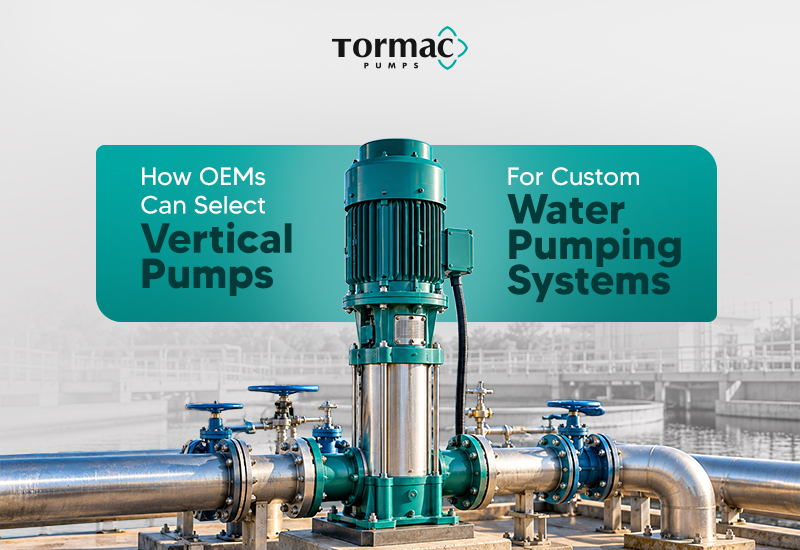
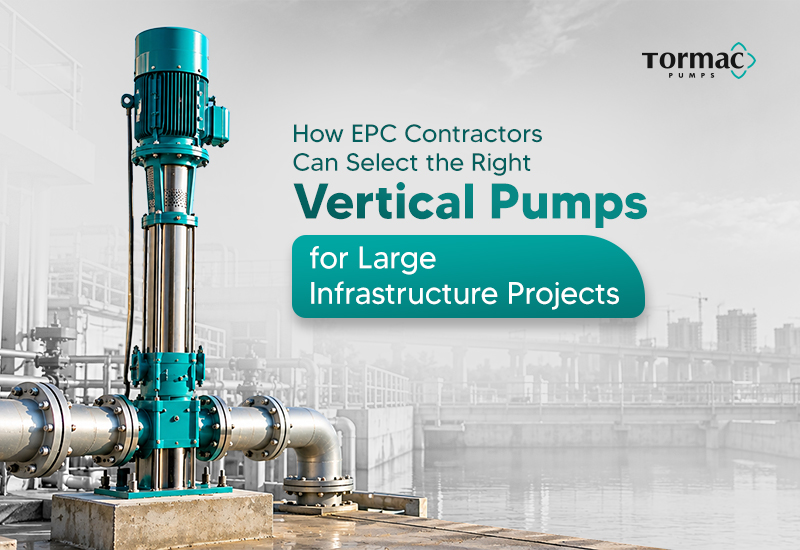
Vertical pumps are generally only considered for inclusion in the design because they will save on floor space, and this will be needed in a pump house or an intake sump. The key is the timing. The vertical pump infrastructure projects are typically set up to be “locked-in” prior to final civil drawings, so that if the head or flow changes, the foundations, piping, and electrical work would need to be redone. That rework is the responsibility of the EPC contractors. Nobody else does.
CHECK OUR PRODUCTS – Vertical Multistage Pumps
Pick the Type by Where the Water Is
Most jobs need one of two vertical types.
- Inline vertical multistage: sits right in the pipeline, small footprint, high pressure. Used for boosting and plant services.
- Vertical turbine: bowls go down into a well or sump, motor stays on top. Used when the water is below ground level.
Water below the floor? Turbine. Clean suction and a pipeline to push through? Inline multistage. Mostly, it’s that simple.
Size for the Final Phase
Consider an urban water supply. It is designed for the population of the present time, but in a few years someone questions the next ten. The size is only for opening day and there’s no space to grow! Excessive “just in case” sizing means the pump operates away from its Best Efficiency Point, wasting power each year.
Typically, sizing for the design year, with a small margin, and then testing where the pump is actually operating in the early years works well. Range helps here. The Tormac TV Series can reach up to 45 kW at 330 m up, meaning that you’ll likely have a model near your duty point.
ALSO CHECK – The Ultimate Selection Chart for Submersible Pumps
Suction and NPSH: Check It on Paper
Cavitation is what commissioning engineers complain about most. Short on submergence or NPSH margin, and the pump shakes, pits its impellers, and dies young. A valve tweak on site won’t save it.
So look at three things early: the lowest water level, the suction conditions at that level, and the liquid temperature. If the liquid is hot, the seals and materials need to handle the real temperature, not the one in the brochure’s typical case.
Standby and Materials
Plants like these can’t stop for long, so most layouts run a duty pump with a standby, often N+1. Leave space and power supply for the standby from day one. Squeezing in a spare later is expensive and ugly.
Materials follow the water. Cast iron is fine for clean or treated water. Stainless steel is worth the extra money when the water is corrosive or dosed with chemicals. Our blog on cast iron vs stainless steel pumps covers where each one fits.
Vertical Pumps Infrastructure Projects: Selection Checklist
|
Factor |
What to Confirm |
Why It Matters |
|---|---|---|
|
Pump Type |
Inline multistage or vertical turbine |
Depends on water source and layout |
|
Duty Point |
Design-year flow and head |
Keeps the pump near its best efficiency |
|
Suction / NPSH |
Lowest water level, submergence |
Stops cavitation before it starts |
|
Standby |
Planned in the layout |
Maintenance without a shutdown |
|
Materials |
Match water chemistry and temperature |
Corrosion and seal life |
|
Documents |
Curves and test certificates |
Faster submittal approval |
How Tormac Pumps Supports EPC Teams
Tormac produces inline TV series multistage pumps, vertical turbine pumps and pressure boosting systems for both 50Hz and 60Hz electrical grids. All the components are designed, manufactured, tested and supplied from the Coimbatore plant, which is ISO 9001:2015 certified. With the supply, comes curves and test documents, which are not waiting on a piece of paper for submission. Have a duty point but uncertain on which to choose? You can screen it with the technical team’s hydraulic calculations prior to ordering.
Final Thought
Choosing vertical pumps infrastructure projects can depend on takes a handful of early calls. The right type for the layout. Sizing for the design year. Enough suction margin. A standby that’s already planned. Materials that suit the water. None of it is clever, and all of it is cheaper to settle on paper than on site.
Working on a pump package for an upcoming project? Reach out to the Tormac Pumps technical team for a duty-point review.
FAQs
- Under what circumstances should I select a vertical turbine vs inline multistage pump?
If the water level is down from the ground (well, sump, intake channel). When the pipeline is being pressurized with clean suction, multistage in-line is easy and compact.
- Why is it that vertical pumps are used in small pump houses?
They use much less space in the floor than horizontal sets. The same room accommodates more people, or the structure can be smaller.
- What should I ask for before placing a bulk order?
Performance curves, material details, factory test certificates for the actual units and the manufacturer’s quality certification.